

RXBio Translates Sequence to Science and Industry

 中文
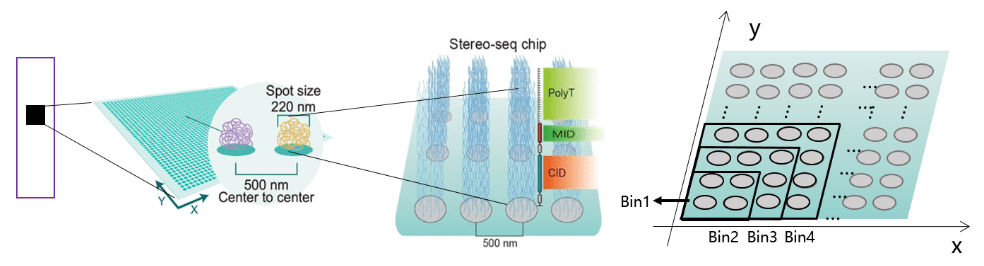
中文Stereo-seq (SpaTial Enhanced REsolution Omics-sequencing) technology is the only spatial technology on the market that is capable of exploring the whole transcriptome from multiple species at true single-cell resolution through various sizes of centimeter-level capturing chips.
Stereo-seq provides a powerful research tool that is capable of integrating gene expresslon, protein expressionand other multi-omics data for advanced analysis for cell type identification, tissue microenvironment exploration and cell/organ developmental research.
As an internationally leading spatial transcriptome technology, Stereo-seq has the breakthrough advantages of “nanometer-level resolution” and “centimeter-level panoramic field of view”. Meanwhile, it enables the combined analysis of multi-omics and application across all species.
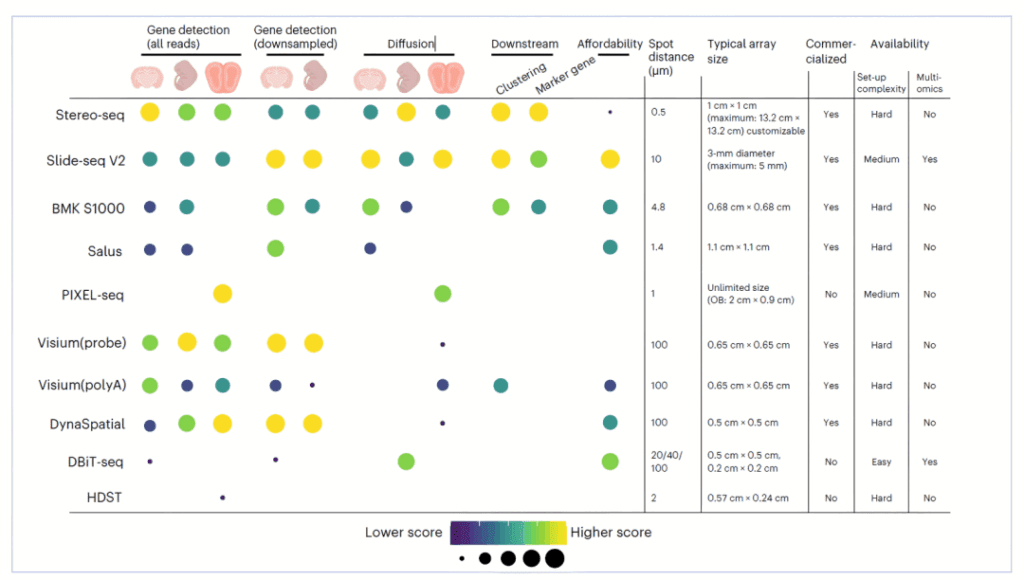
The sST methods were ranked according to their performance in specific categories, with the best methods at the top. Methods with a resolution below 20 μm were preferred. The rankings were visually presented in the left panel through colors and dot sizes, while the right panel provided an overview of the basic characteristics of these methods. Methods with lower affordability indicated higher prices. CM, corneal stroma; pNR, presumptive neural retina; LV, lens capsule; OB, olfactory bulb.
01 High resolution
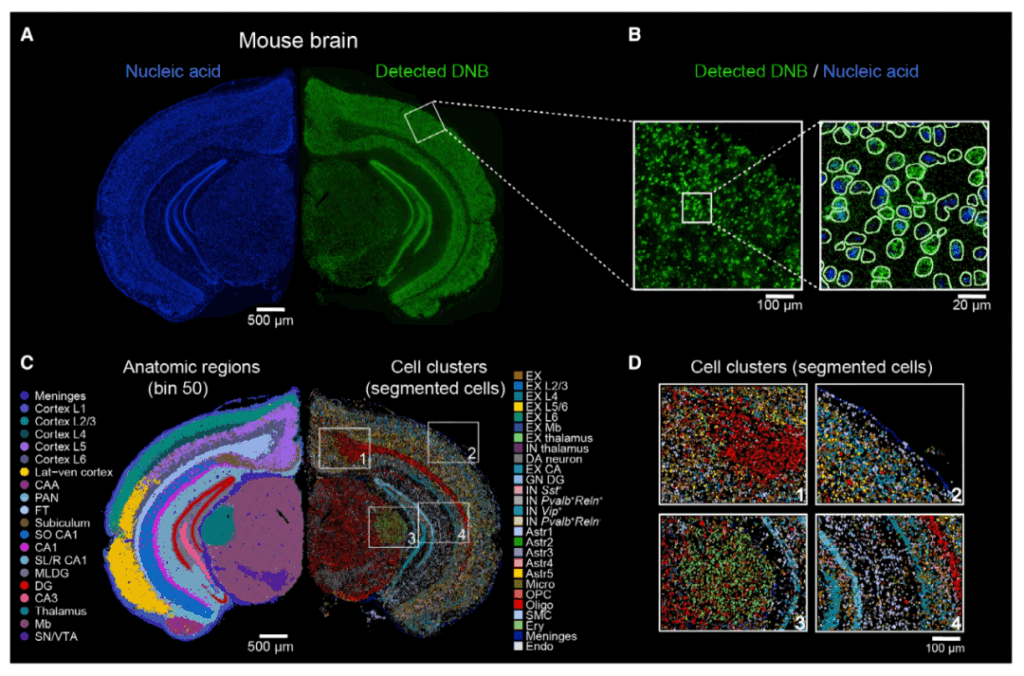
The Stereo-seq technology has improved the resolution for understanding the spatial expression of life to the subcellular level of 500 nm. It can identify the positions of cell nuclei through image recognition and combine algorithms to achieve the spatial positioning and detection of individual cell and molecular information. It can also identify different functional regions in tissues by means of binning.
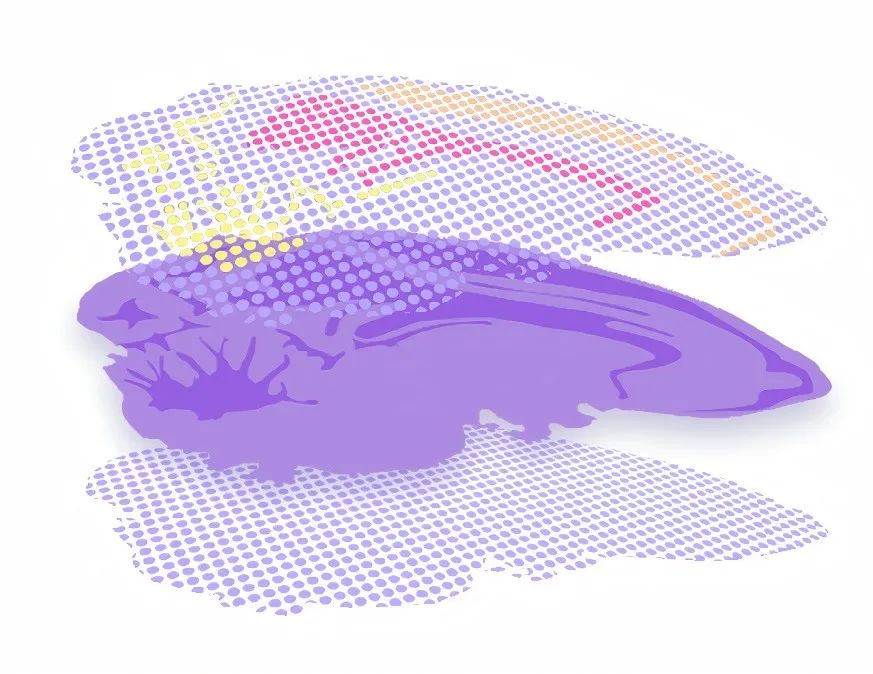
The Stereo-seq technology analyzes the adult mouse brain at single-cell resolution
02 Large field of view.
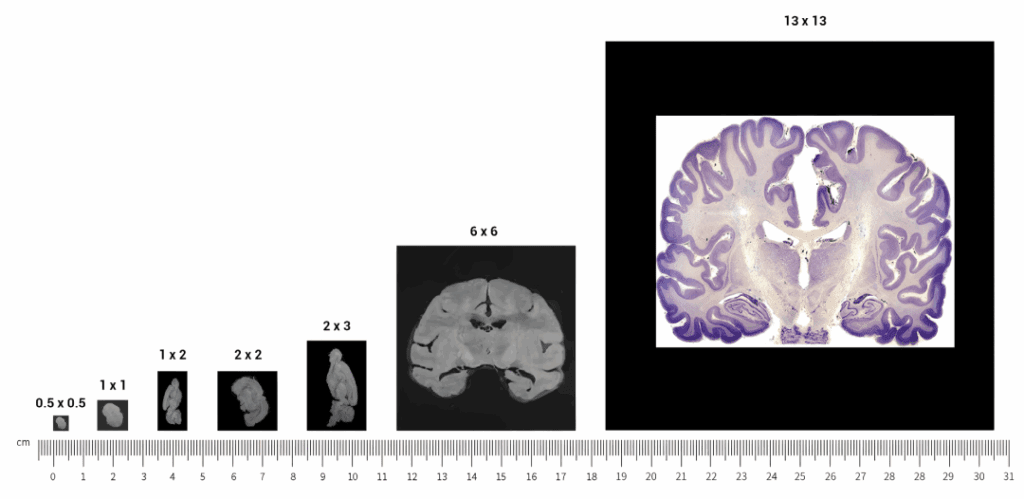
MGI Spatiotemporal has now launched standard kit products with chip sizes of 0.5 cm × 0.5 cm, 1 cm × 1 cm, 1 cm × 2 cm, 2 cm × 2 cm and 2 cm × 3 cm. Meanwhile, customized cooperation (> 1 cm × 1 cm) can also be carried out according to actual needs. On the basis of being compatible with the existing spatiotemporal technology process, multi-sized spatiotemporal chips can accurately match the size of the target tissues and organs, greatly improving the utilization rate of the capture area.
03 Multi-omics
The multi-omics product solution of Stereo-seq can enable the simultaneous detection of transcriptome and proteome on the same chip, fully revealing the phenotype-mechanism from the spatial dimension.
04 All species
The Stereo-seq technology can be widely applied to humans, animals, plants and microorganisms. So far, tissue and organ studies on more than 50 species have been completed.
[1] Liu L, Chen A, Li Y, Mulder j, Heyn H, Xu X. Spatiotemporal omics for biology and medicine. cel.2024:;187(17):4488-4519.
[2] Chen A, Liao S, Cheng M, et al. Spatiotemporal transcriptomic atlas of mouse organogenesis using DNA nanoball-patterned arrays. Cell. 2022;185(10):1777-1792.e21.
[3] Sun Y, Hu Y. integrative analysis of multi-omics data for discovery and functional studies of complex humandiseases.Adv Genet,2016,93: 147-190.
【Scan the QR code to obtain the publication list of Stereo-seq】