

introduction
In eukaryotic cells, genetic information is carried by chromatin, and the continuous changes in its structure and function are crucial for the control of gene expression. Recent studies have shown that non-coding RNA (ncRNA) plays a vital role in chromatin remodeling, histone modification and transcriptional regulation. To gain a deeper understanding of the interaction between ncRNA and chromatin, scientists have developed the chromatin RNA purification (ChIRP) technique.
ChIRP-MS
ChIRP-WB
ChIRP-DNA-seq
ChIRP-RNA-seq
advantages
✔ Not affected by the secondary structure of RNA: Design a probe every 100 bp to cover the entire length of the RNA molecule.
✔ Grouped probe design: Divide all probes into odd-numbered groups (odd group) and even-numbered groups (even group), and conduct subsequent pull-down experiments respectively.
✔ Simultaneously study multiple molecular interaction mechanisms: Simultaneously study the interacting proteins, DNA and RNA of long non-coding RNA (LncRNA).
principle
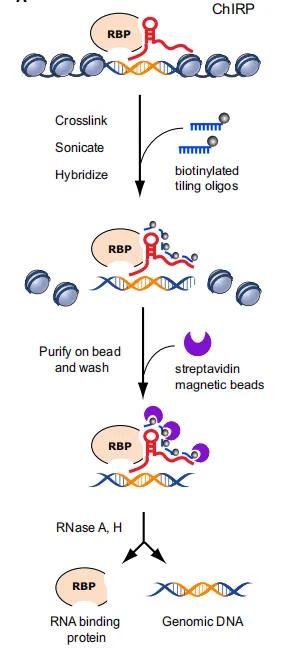
① Probe design: Design antisense oligonucleotide probes with a length of about 20 nucleotides.
② Cell culture: The number of cells required for the ChIRP experiment is 2 × 10⁷.
③ Formaldehyde cross-linking of cells and collection of cells.
④ Sonication fragmentation of cross-linked DNA and RNA.
⑤ Hybridization of biotin-labeled long non-coding RNA (LncRNA) probes with the lysate.
⑥ Extraction of RNA, DNA and nucleic acid-binding proteins, and analysis of experimental data.
Research
Case 1
Title: Long non-coding RNA CRLM1 inhibits apoptosis and promotes metastasis through transcriptional regulation cooperated with heterogeneous nuclear ribonucleoprotein K (hnRNPK) in colorectal cancer.
Journal: Cell and Bioscience
Impact Factor: 6.1
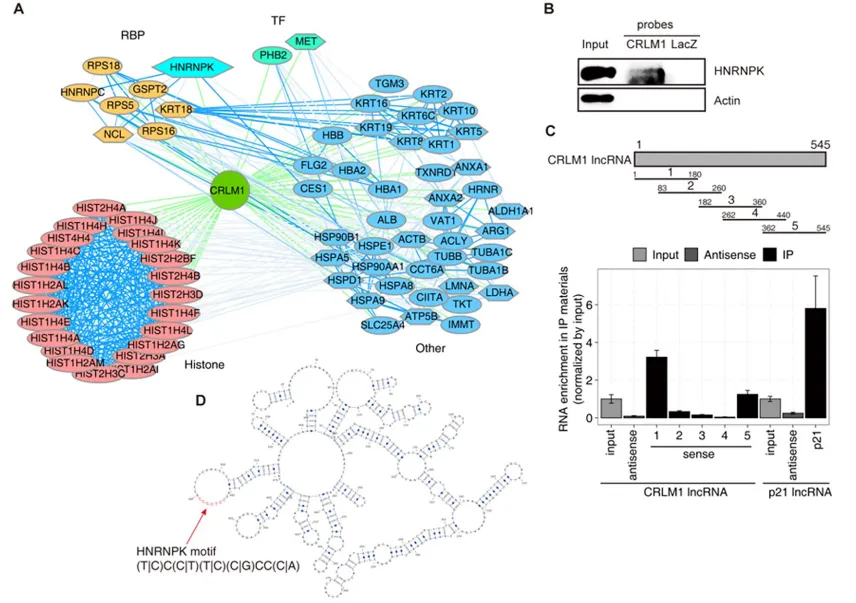
Although the survival rate of colorectal liver metastasis (CRLM) remains low, the number of clinical indicators and mechanisms that currently regulate CRLM is still limited. Long non-coding RNA (lncRNA), as an emerging major regulator of cell invasion and metastasis, its role and regulatory mechanism in the metastasis of colorectal cancer (CRC) have not been fully understood. In this study, by analyzing publicly available transcriptome data, lncRNAs related to CRLM were screened and identified. Through gain-of-function and loss-of-function experiments, we explored the biological functions of lncRNA CRLM1 in vitro and in vivo. Methods such as RNA sequencing (RNA-seq), chromatin isolation by RNA purification (ChIRP), immunofluorescence (IF), quantitative real-time PCR (qRT-PCR), western blotting and rescue experiments were adopted to conduct in-depth research on the molecular mechanism of action of CRLM1. Meanwhile, the proteins, DNA and RNA that interact with CRLM1 were also identified in this study. The study conducted an in-depth analysis of the expression changes of lncRNAs in CRLM, primary CRC and normal tissues, revealing a series of metastasis-related lncRNAs, including CRLM1. CRLM1 can inhibit the apoptosis of CRC cells in Balb/C nude mice and promote liver metastasis. CRLM1 has a weak correlation with the chromatin regions of genes involved in cell adhesion and DNA damage, and this correlation is bidirectionally correlated with the expression of pre-metastatic genes regulated by CRLM1. CRLM1 physically interacts with the hnRNPK protein and promotes its nuclear localization. CRLM1 significantly increases the occupancy of the hnRNPK promoter and jointly regulates the expression of a group of metastasis genes.
CRLM1 shows a weak connection with the chromatin regions of genes involved in cell adhesion and DNA damage, and this connection is bidirectionally associated with the expression of pre-metastatic genes regulated by CRLM1. CRLM1 physically interacts with the hnRNPK protein and contributes to its localization within the nucleus. Moreover, CRLM1 significantly increases the occupancy of the hnRNPK promoter and coordinately regulates the expression of a group of metastasis genes.
Case 2
Title: The long non-coding RNA PFI safeguards against pulmonary fibrosis by interacting with the splicing regulator SRSF1.
Journal: Cell Death and Differentiation
Impact Factor: 13.7
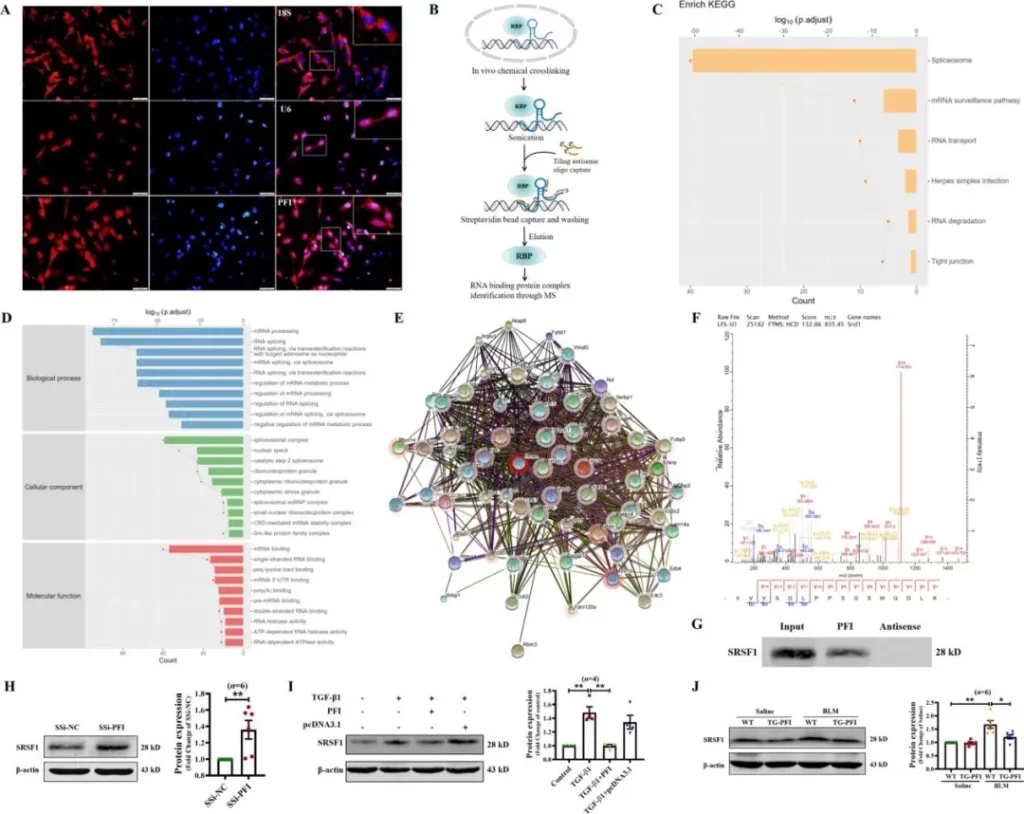
Pulmonary fibrosis, also known as Pulmonary fibrosis (PF), is a kind of interstitial pneumonia with a high mortality rate and complex causes. It is characterized by the gradual scarring of the alveolar interstitium and the pathological changes of myofibroblasts. In recent years, the role of long non-coding RNAs (lncRNAs) in organ fibrosis has received increasing attention. This study mainly analyzed the mechanism of action of lncRNAs in pulmonary fibrosis.
By utilizing the Chromatin Isolation by RNA Purification (ChIRP) technique and the RNA pull-down experiment, the proteins that interact with the target lncRNA were successfully isolated. The study found that lncRNA-NONMMUT060091, which was defined as the pulmonary fibrosis inhibitor PFI in this study, could directly bind to the serine/arginine-rich splicing factor 1 (SRSF1) and inhibit its expression and its activity in promoting fibrosis. The research data showed that PFI alleviated the symptoms of pulmonary fibrosis by downregulating the expression and activity of SRSF1 and reducing the production of the EDA+Fn1 splicing isoform. This indicates that PFI and SRSF1 may be potential targets for the treatment of pulmonary fibrosis. This study demonstrated that the anti-fibrotic function of lncRNA-PFI plays an important role in pulmonary fibrosis. Through the application of ChIRP-MS and RNA pull-down detection techniques, it was found that lncRNA PFI participates in the regulation of pulmonary fibrosis by binding to and inhibiting the expression and activity of the splicing factor SRSF1 and suppressing the production of the EDA + Fn1 splicing isoform. Therefore, it can be speculated that inducing the expression of PFI may provide a new approach for the prevention and treatment of PF.
Case 3
Title: N4-Acetylcytidine-Mediated CD2BP2-DT Drives YBX1 Phase Separation to Stabilize CDK1 and Promote Breast Cancer Progression
Journal: Advanced Science
Impact Factor: 14.3
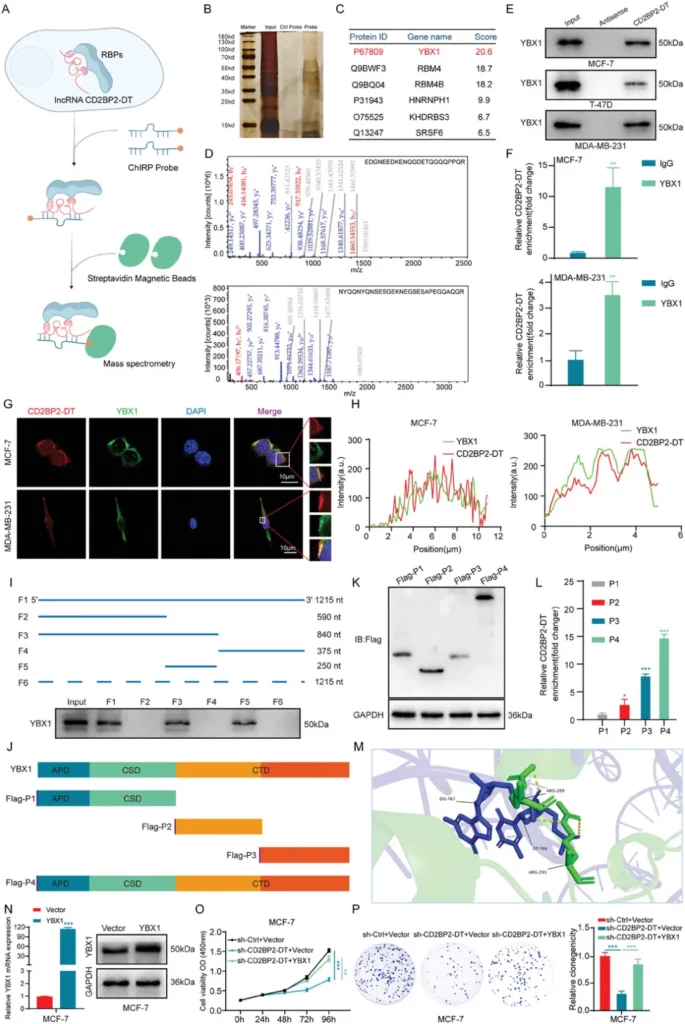
Long non-coding RNAs (lncRNAs) play a crucial role in the formation and progression of breast cancer. Nevertheless, the exact roles and biological functions of lncRNAs in breast cancer remain unclear. Through bioinformatics research, scientists have discovered a new lncRNA named CD2BP2-DT, which has a relatively high expression level in breast cancer tissues and is closely associated with poor clinical outcomes and lower overall survival rates. Experimental results have demonstrated that CD2BP2-DT can promote the proliferation of breast cancer cells. Further studies have revealed that NAT10 is involved in the N4-acetylcytidine (ac4C) modification process of CD2BP2-DT, and this modification enhances the stability and expression level of RNA. More importantly, CD2BP2-DT promotes the phase separation of YBX1, thereby enhancing the stability of CDK1 mRNA and driving the proliferation of breast cancer cells. In summary, the lncRNA CD2BP2-DT has been identified as a key regulator of breast cancer cell proliferation, and its potential as a potential biomarker and therapeutic target for breast cancer has attracted much attention.
Studies have shown that the interaction between lncRNAs and RNA-binding proteins (RBPs) is of great importance in cancer development. Through Chromatin Isolation by RNA Purification (ChIRP) experiments and mass spectrometry analysis, we found that CD2BP2-DT interacts with specific proteins. YBX1 was selected as the binding partner of CD2BP2-DT. It is a multifunctional oncoprotein that is closely related to breast cancer progression. Kaplan-Meier analysis showed that high expression of YBX1 is associated with a poor prognosis. Biotin-labeled RNA pull-down and RNA immunoprecipitation (RIP) experiments confirmed the interaction between CD2BP2-DT and YBX1 in breast cancer cells. Colocalization analysis showed that they are mainly colocalized in the cytoplasm. The RNAfold software was used to predict the secondary structure of CD2BP2-DT, and the key regions interacting with YBX1 were determined through deletion mapping analysis. Experiments constructing truncated YBX1 proteins revealed the domains of YBX1 involved in the interaction. Molecular docking simulations further analyzed the binding sites between CD2BP2-DT and YBX1.
Reference
Wang, Z., Chen, J., Sun, F. et al. LncRNA CRLM1 inhibits apoptosis and promotes metastasis through transcriptional regulation cooperated with hnRNPK in colorectal cancer. Cell Biosci 12, 120 (2022).
Sun, J., Jin, T., Su, W. et al. The long non-coding RNA PFI protects against pulmonary fibrosis by interacting with splicing regulator SRSF1. Cell Death Differ 28, 2916–2930 (2021).
H. Wang, B. Zhao, J. Zhang, Q. Hu, L. Zhou, Y. Zhang, Y. Cai, Y. Qu, T. Jiang, D. Zhang, N4-Acetylcytidine-Mediated CD2BP2-DT Drives YBX1 Phase Separation to Stabilize CDK1 and Promote Breast Cancer Progression. Adv. Sci. 2025, 12, 2411834.